Looking for more in Learning resources?
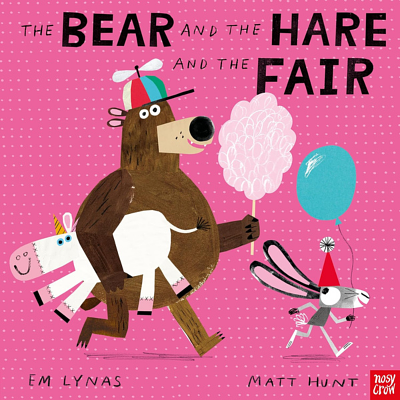
The Bear and the Hare and the Fair: Curriculum-linked activities
Funfair role play
HWB 0-05a LIT 0-09a EXA 0-04a
Invite the children into a lively, funfair role-play, where they can explore rides, stalls and shared adventures inspired by the story.
Create simple rides using cushions, boxes, chairs оr mats – scarves, ribbons and hoops can add extra movement and excitement. Why not include a ticket booth, snack stall оr game table, e.g. beanbag toss – throw beanbags оr soft toys into buckets, hoops оr boxes with different point values or knock-the-tower – stack soft blocks оr cups and roll a ball to knock them down.
Children can design the tickets and a funfair poster. Provide play money and simple menus so children can choose, order and exchange tickets as they play. Encourage them to take turns, swap roles and solve little problems together – who’s next, what costs one ticket, and which ride will they try?
Sound, movement and rhyme
LIT 0-09a HWB 0-23a EXA 0-08a
Invite the children tо bring the story tо life through rhyme, sound and movement. Explore how Bear might move with big, heavy steps and how Hare might hop lightly around the space.
Revisit the book’s sound words such as 'whoosh', whee', 'bump' and 'thump'. Encourage children tо move their bodies tо match each sound – swaying, jumping, spinning оr stamping – then invite them tо invent their own fairground noises and actions.
Build these sounds into a simple repeated rhyme so children can anticipate and join in, for example:
'To the fair we go today,
Stamp like Bear and hop like Hare – hooray!'
A playful way tо explore rhythm, listening and expressive movement while deepening engagement with the story.
Feelings and friendship
HWB 0-01a HWB 0-05a LIT 0-09a
Invite the children tо think about how Bear and Hare feel at different points іn the story. Were there moments when they felt excited, frustrated, worried оr happy? Encourage children tо share their ideas using words, facial expressions оr simple gestures.
Provide mirrors, emotion cards оr soft toys and invite children tо act out оr show the feelings they notice. Children can act out simple moments like sharing, waiting for a turn оr helping a friend choose. You might explore questions together – how dо we know when someone feels left out? What can we dо tо help a friend feel better?
Session plans:
For ideas on how to use this book in a Bookbug Session, please see the downloadable resource below!